FS 0040
fs40

Wine Faults Series
Wine Faults Series image number 0
Wine Faults Series image number 1
Wine Faults Series image number 2
Wine Faults Series image number 3
Wine Faults Series image number 4
Wine Faults Series image number 5
Wine Faults Series image number 6
Wine Faults Series image number 7
Wine Faults Series image number 1
Wine Faults Series image number 2
Wine Faults Series image number 3
Wine Faults Series image number 4
Wine Faults Series image number 5
Wine Faults Series image number 6
Wine Faults Series image number 7
Wine Faults Series image number 8
FS 0040
fs40

Wine Faults Series


  • Select Styles for Availability
$0.00
Download
Download

Product Description

Wine Fault Series Introduction

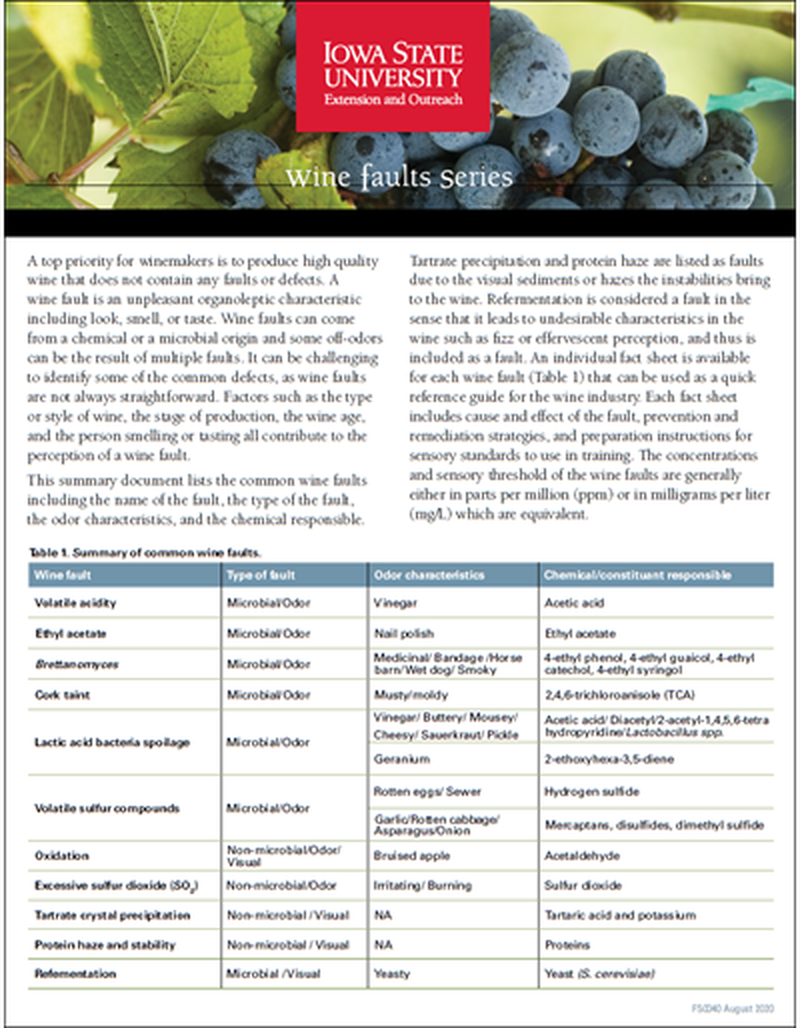
A top priority for winemakers is to produce high quality wine that does not contain any faults or defects. A wine fault is an unpleasant characteristic including look, smell, or taste.

Volatile Acidity

Volatile acidity is defined as the total of steam distillable volatile acids in a wine, which is comprised almost exclusively of acetic acid (vinegar). Volatile acids contributing to a lesser extent are lactic, formic, butric, propionic, sorbic, carbonic, and sulfurous.

Ethyl Acetate

Ethyl acetate is a wine fault smelling of nail polish, glue, or solvent. In low concentration, it can enhance a wine, but when the level approaches the threshold, ethyl acetate becomes a fault.

Brettanomyces

Brettanomyces (Brett) is a non-saccharomyces or “wild” yeast that is the only microorganism capable of producing several milligrams of ethyl-phenols per liter of wine. In wine, Brettanomyces is the most prevalent yeast commonly associated with the following off-odors: medicinal, Band Aid, barn yard, horse sweat, wet dog, leather, and smoky.

Cork Taint

Cork taint is a wine fault associated with contaminated cork smell also called corked wine. Corks are natural materials commonly used in the wine industry and preferred for high-quality wines. The off-odors attributed to cork taint are musty, moldy, and sometimes earthy and mushroom-like.

Spoilage by Lactic Acid Bacteria

Lactic acid bacteria are involved in the fermentation of malic acid and can utilize other constituents in wine. Many strains are connected to spoilage, while one species is well known for conducting malolactic fermentation.

Geranium Taint

Geranium taint is an additive related fault that can arise when sorbic acid, used as a preservative to inhibit yeast growth, is added to wine. This volatile compound smells like crushed geranium leaves.

Hydrogen Sulfide and Volatile Sulfur

Volatile sulfur compounds are a class of sulfur containing compounds that are often described as reductive or reduced. The most common of these faults is hydrogen sulfide, which smells like rotten eggs or sewer gas.

Oxidation

The oxidation of wine is the most common of wine faults that occur throughout the winemaking process and after bottling. It is a tricky fault because depending on the type of wine, the oxidative character can be developed on purpose and be considered desirable.

Excessive Sulfur Dioxide

The excess of sulfur dioxide in wine is an additive related fault. It is the most important additive used to preserve wine at different steps of the winemaking process from harvest to bottling. When added at too high of a concentration it can cause sneezing or lead to a burning or irritating sensation when smelling wine.

Tartrate Crystal Precipitation

Tartaric acid is an organic acid in grapes, but in wine it may react with potassium to form potassium bitartrate crystals. The bitartrate ion may also react with calcium to form calcium tartrate. Crystals, also known as wine diamonds, are not harmful to consumers, but may be considered a visual defect of the wine in the bottle or glass.

Protein Haze and Protein Stability

Protein instability or protein haze is a visual defect which is particularly noticeable in white wines. It can make the wine appear murky, cloudy, or turbid, or can even result in an unattractive precipitate at the bottom of the bottle.

Refermentation

Refermentation by Saccharomyces cerevisiae or spoilage yeasts occurs when there is available sugar in the wine and insufficient inhibition for the yeast. It can result in perceptible effervescence or fizz caused by carbon dioxide in the wine, microbial or fermentative off aromas and flavors, a drop in residual sugar, visible haze or sediment, pushing corks, or shattered bottles.

Product Details

Pages / Length: 26

Publication Date: 08/2020

  • Select Styles for Availability